
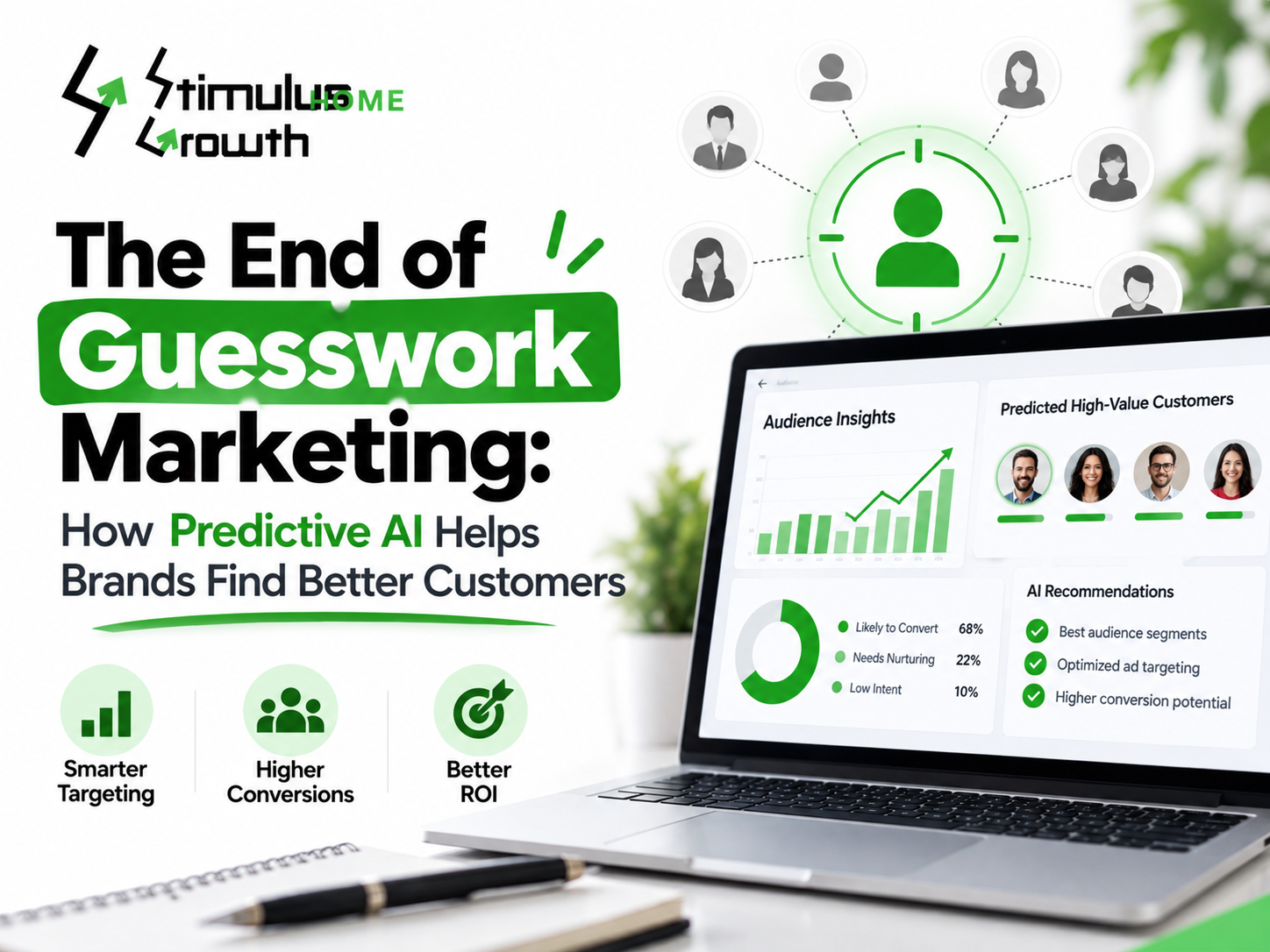
Marketing leadership in 2026 faces a harsh financial reality: relying on retrospective data to drive future growth is an expensive gamble. For years, performance marketing has run on reactive guesswork—launching broad campaigns, waiting weeks for attribution data, and burning capital on audiences that convert once but never return. As privacy shifts deprecate third-party signals and Customer Acquisition Costs (CAC) continue to climb, trial-and-error media buying is no longer a viable growth strategy.
To scale sustainably, modern growth teams are shifting from reactive optimization to forward-looking intelligence. Leveraging predictive AI in marketing 2026 strategies allows brands to anticipate consumer intent, allocate media spend with precision, and identify high-value buyers before they ever make their first purchase.
The Hidden Costs of Guesswork Marketing
Traditional performance marketing relies heavily on retrospective reporting. Marketers analyze historical campaign metrics, identify what converted last month, and assume those same variables will hold true next quarter. This trial-and-error approach introduces significant inefficiencies:
- Elevated Acquisition Costs: Broad targeting forces algorithms to test impression share against low-intent users, inflating cost-per-acquisition (CPA).
- Ad Spend Waste: Bidding aggressively on users who convert due to heavy discounting often yields low-margin, high-churn customers.
- Lagging Attribution: Relying on past performance data creates a reactive cycle, leaving media buyers perpetually step behind shifting consumer behavior.
When growth relies on guesswork, ad networks optimize for immediate volume rather than long-term profitability. Brands end up filling their funnels with transactional shoppers instead of high-LTV brand advocates.
Moving Beyond Retrospectives: What Predictive AI Actually Does
Predictive AI transforms raw customer data into actionable, forward-looking intent signals. Rather than simply summarizing past transactions, predictive models synthesize first-party interaction data, cross-channel engagement patterns, and macro-market trends to forecast future customer behavior.
By deploying predictive customer acquisition frameworks, performance marketers move from retroactive reporting to real-time propensity scoring. Partnering with a full-service digital marketing agency allows growth teams to integrate advanced machine learning models directly into their ad stacks, ensuring dynamic bid adjustments based on projected customer value.
| Feature | Reactive Marketing | Predictive AI Marketing |
| Data Focus | Past performance metrics & historical CPAs | Forward-looking intent & propensity scores |
| Audience Building | Static demographics & interest clusters | Dynamic, real-time behavioral modeling |
| Budget Allocation | Manual adjustments post-campaign | Automated real-time bid optimization |
| Primary Metric | Immediate ROAS & Immediate Conversion Rate | Predicted Customer Lifetime Value (pLTV) |
Finding High-LTV Buyers with Propensity Scoring
Not all conversions contribute equally to long-term enterprise value. A buyer who purchases a deeply discounted item once and never returns actively drains marketing margins. Predictive intelligence solves this through dynamic propensity modeling and automated AI target audience modeling.
Algorithmic Audience Segmentation
Machine learning algorithms evaluate hundreds of micro-behaviors such as content engagement velocity, site navigation depth, and time-of-day interactions to assign a propensity score to every prospect. High-scoring prospects are automatically routed into premium bidding tiers, while low-margin leads are excluded from paid retargeting streams.
Maximizing Lifetime Value
By utilizing predictive algorithms, brands shift their primary optimization metric from short-term Return on Ad Spend (ROAS) to predicted Customer Lifetime Value (pLTV). Implementing custom algorithms across varied product lines requires specialized expertise; leveraging tailored digital marketing services for industries ensures that underlying predictive models reflect specific vertical dynamics and customer journeys.
Operationalizing Predictive Data Across Growth Funnels
Transitioning to predictive growth requires seamless data architecture and operational integration across top-of-funnel (TOFU) and middle-of-funnel (MOFU) campaigns.
- First-Party Data Unification: Clean, enrich, and centralize customer interaction records from CRMs, web analytics, and point-of-sale systems into a unified customer data platform (CDP).
- Propensity Score Generation: Train machine learning models to identify key behavioral indicators that correlate with high repeat-purchase behavior and low churn risk.
- Dynamic Channel Syncing: Export high-propensity audience segments directly to ad platforms to execute algorithmic campaign optimization in real time.
- Continuous Feedback Loops: Feed downstream conversion outcomes back into the predictive model to constantly refine audience accuracy and lower reducing customer acquisition costs.
Executing this architecture demands strong technical oversight. Relying on our experienced growth strategists helps brands avoid common data pipeline pitfalls and structure clean feedback loops that improve predictive accuracy over time.
The Human-AI Balance in Modern Growth Teams
While predictive algorithms excel at processing complex datasets and predicting outcomes, they do not replace creative direction and strategic positioning. High-performing growth teams operate on a hybrid model where AI handles data processing and human strategists focus on brand positioning, message resonance, and value proposition design.
Deploying comprehensive data-driven marketing solutions allows internal marketing teams to delegate complex audience modeling to machine learning infrastructure, freeing up strategists to build high-converting creative hooks and messaging frameworks.
To eliminate waste and scale performance with confidence, brands must move past guesswork. To begin auditing your data architecture and implementing predictive growth models, schedule a strategy call with us today.
Frequently Asked Questions
What is predictive AI in marketing 2026?
Predictive AI in marketing uses historical first-party data, machine learning, and propensity modeling to forecast future consumer behavior, enabling precision audience targeting, dynamic bid management, and enhanced campaign efficiency.
How does predictive customer acquisition differ from traditional retargeting?
Traditional retargeting targets anyone who visited a website, regardless of intent. Predictive acquisition evaluates behavioral intent signals to target only prospects with a high probability of converting and generating long-term value.
What volume of data is required to run predictive audience models?
Effective predictive modeling typically requires at least 1,000 historical conversions and clean first-party event tracking. Larger datasets increase model precision, but modern AI can extrapolate patterns from moderate data samples.
Can predictive AI help reduce customer acquisition costs (CAC)?
Yes, predictive AI reduces CAC by filtering out low-intent users, preventing wasted ad spend on cold leads, and automatically directing media budget toward high-converting segments with high conversion propensity.
How does propensity scoring identify high-LTV buyers?
Propensity scoring analyzes historical cohort behavior, identifying micro-actions shared by your highest-value customers. It then targets new prospects demonstrating those exact purchase patterns.
How do privacy shifts affect predictive marketing models?
Predictive AI relies heavily on aggregated first-party data and server-side tracking rather than third-party cookies, making it a privacy-compliant solution for long-term customer acquisition strategy.
What is algorithmic campaign optimization?
Algorithmic optimization utilizes real-time machine learning predictions to adjust bids, creative delivery, and audience segments automatically across multiple ad channels based on projected conversion outcomes.
How long does it take to see ROI from predictive AI models?
Most brands observe measurable improvements in acquisition efficiency within 30 to 60 days as machine learning models collect data, run tests, and refine audience propensity scoring models.
Can predictive AI predict customer churn?
Yes, predictive models analyze decreases in engagement, changes in buying frequency, and customer service interactions to flag high-risk accounts before they churn, triggering automated retention campaigns.
How do human strategists work alongside predictive AI?
AI processes vast datasets and optimizes bidding logic, while human strategists focus on overarching brand positioning, creative production, offer design, and big-picture media planning strategy.