
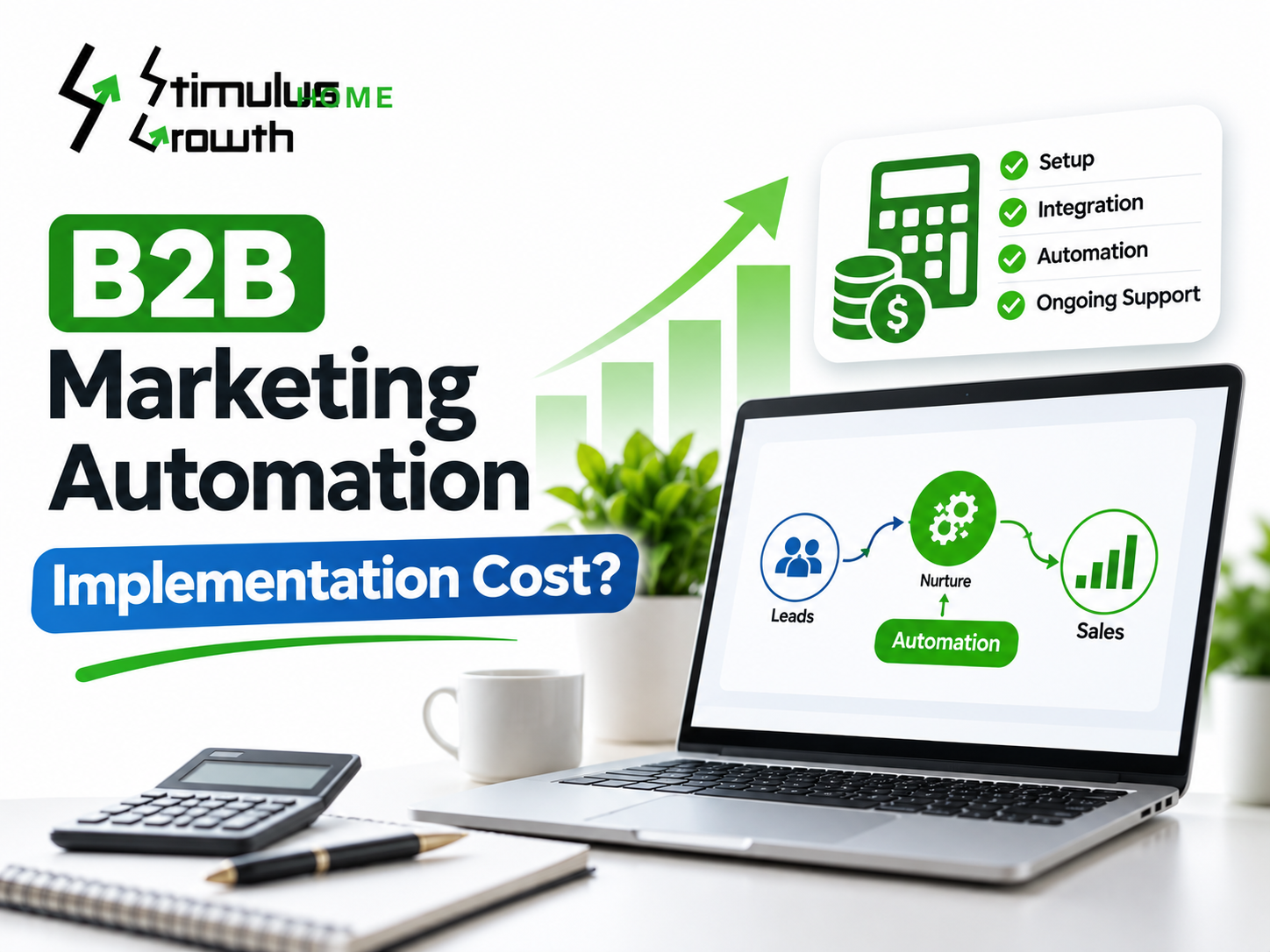
B2B marketing automation is not just about sending automated emails or connecting a CRM with your website. It involves creating a reliable system that manages customer interactions, qualifies leads, and keeps marketing and sales teams connected throughout the buying journey.
Many businesses introduce automation without clearly defining their processes, which results in disconnected workflows, inaccurate customer data, and missed opportunities.
Successful custom B2B marketing automation in 2026 starts with understanding business requirements, selecting appropriate technology, and designing workflows that deliver measurable improvements.
Understanding Custom B2B Marketing Automation
Custom marketing automation connects CRM systems, marketing platforms, customer databases, and sales activities through structured workflows. Unlike standard automation templates, customized systems follow a company’s actual customer journey, qualification process, and communication requirements.
Why Custom Automation Matters
B2B sales often involve multiple decision-makers, lengthy approval processes, and several interactions before conversion. Managing these activities manually makes consistent follow-ups difficult.
An effective B2B growth strategy connects marketing automation with customer acquisition and sales objectives, ensuring that prospects receive relevant communication at each stage. The objective is to improve operational consistency while allowing employees to focus on customer relationships and strategic decisions.
Four Essential Components of Marketing Automation
A dependable automation system requires carefully selected technology, accurate data, reliable integrations, and clearly defined responsibilities.
1. Marketing Automation Platforms
Platforms such as HubSpot, ActiveCampaign, Salesforce, and Adobe Marketo Engage provide capabilities for lead nurturing, segmentation, customer communication, and campaign management.
Businesses should evaluate integration compatibility, workflow flexibility, and reporting requirements before selecting a platform.
2. CRM and API Integrations
CRM integrations allow customer information to move between marketing and sales systems without repeated manual updates. Custom APIs and webhooks can connect websites, advertising platforms, and internal applications, enabling automated lead assignment and follow-up activities.
Well-planned CRM automation helps businesses maintain consistent records while improving communication between departments.
3. Data Cleaning and Organization
Automation depends on accurate customer information. Duplicate records, outdated details, and inconsistent pipeline stages can trigger incorrect messages or create reporting problems.
Before implementing workflows, businesses should standardize CRM fields, review customer records, and establish clear data ownership.
4. Workflow Testing and Team Training
Every automated process should be tested against realistic scenarios, including incomplete submissions, duplicate contacts, and failed integrations. Employees also need clear instructions for managing exceptions and taking over conversations when human assistance becomes necessary.
Common Marketing Automation Challenges
Automation projects frequently encounter difficulties because businesses attempt to connect multiple systems before understanding how their existing processes operate. Poor data quality, unclear responsibilities, and unnecessary workflow complexity can reduce efficiency instead of improving it.
Building Automation Around Customer Needs
Start with essential activities such as lead routing, welcome messages, follow-up reminders, and customer segmentation. Once these workflows perform reliably, introduce more advanced automation based on actual business requirements.
Different industries also require different customer journeys. Effective B2B marketing solutions should reflect purchasing behavior, communication preferences, and sales cycle complexity. Regular workflow reviews help identify unnecessary steps and ensure automation continues supporting the customer experience.
In-House Automation vs. Specialized Agency Support
Businesses can implement marketing automation internally or collaborate with specialists who understand CRM architecture, integrations, and revenue operations. Internal teams understand existing business processes, while external specialists may provide experience with complex integrations and workflow design.
Choosing the Right Implementation Approach
An internal approach works well when an organization already has experienced CRM administrators, developers, and marketing operations professionals. Specialized support becomes valuable when automation requires multiple integrations, data restructuring, or coordination between different departments.
Working with marketing experts can help organizations identify workflow priorities and align technical implementation with business objectives. Regardless of the approach, companies should maintain ownership of customer information, documentation, and connected platforms.
Measuring Marketing Automation Success
Successful automation improves business operations and customer experiences rather than simply increasing the number of completed tasks.
Essential Performance Indicators
Lead Response Time: Measures how quickly potential customers receive an appropriate response.
Lead Conversion Rate: Tracks how effectively prospects progress into qualified opportunities and customers.
Workflow Completion Rate: Identifies whether automated processes execute correctly.
Pipeline Velocity: Evaluates how efficiently sales opportunities move through the pipeline.
Customer Retention: Helps assess whether consistent communication supports long-term customer relationships.
Compare these indicators against performance before implementation to understand which workflows are genuinely delivering improvements. Businesses reviewing their existing systems can seek automation guidance to identify integration gaps and prioritize operational improvements. The ultimate goal is to create a connected marketing system that supports employees, simplifies customer interactions, and strengthens sustainable business growth.
Frequently Asked Questions
1. What is custom B2B marketing automation?
Custom B2B marketing automation connects CRM systems, marketing platforms, and sales workflows to manage lead nurturing, customer communication, and repetitive operational tasks according to specific business requirements.
2. Why do B2B businesses need marketing automation?
Marketing automation helps companies manage complex sales cycles, maintain timely customer communication, organize lead information, and improve collaboration between marketing and sales teams.
3. Which platforms support B2B marketing automation?
HubSpot, Salesforce, ActiveCampaign, and Adobe Marketo Engage provide automation capabilities. The right platform depends on existing systems, integration requirements, and business processes.
4. Can marketing automation integrate with existing CRM systems?
Yes. Many platforms support native integrations, APIs, and webhooks that synchronize customer information and coordinate activities between marketing, sales, and service applications.
5. What are the main benefits of CRM automation?
CRM automation improves lead routing, follow-up consistency, data organization, and operational visibility while reducing repetitive administrative work and helping teams prioritize customer interactions.
6. How long does marketing automation implementation take?
Implementation timelines depend on integration complexity, existing data quality, and workflow requirements. Simple automation can be introduced quickly, while larger systems require additional testing.
7. What challenges occur during automation implementation?
Common challenges include disconnected platforms, duplicate customer records, unclear workflow responsibilities, integration errors, and insufficient employee training.
8. Can marketing automation improve lead conversion?
Automation can support conversion by delivering timely follow-ups, assigning leads correctly, and providing relevant communication. Actual outcomes depend on targeting, customer needs, and sales execution.
9. Should businesses manage marketing automation internally?
Internal management works when teams have sufficient technical and CRM expertise. Specialized support can help with complex integrations, workflow restructuring, and advanced automation requirements.
10. How can businesses measure automation performance?
Businesses should monitor response times, lead conversion rates, workflow completion, pipeline velocity, and customer retention to identify improvements and areas requiring further optimization.